
Building an Exchange with Claude Code (2)
Continuing from the last post…
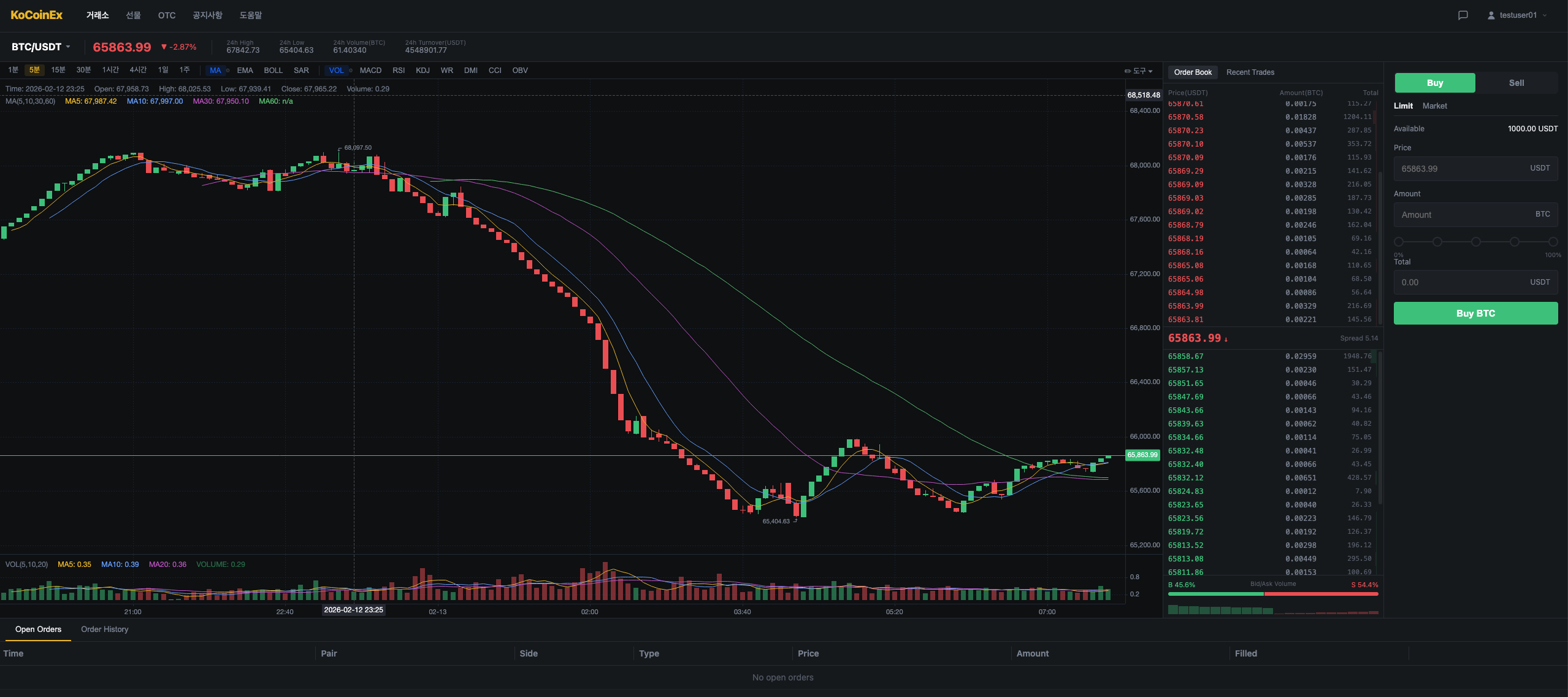
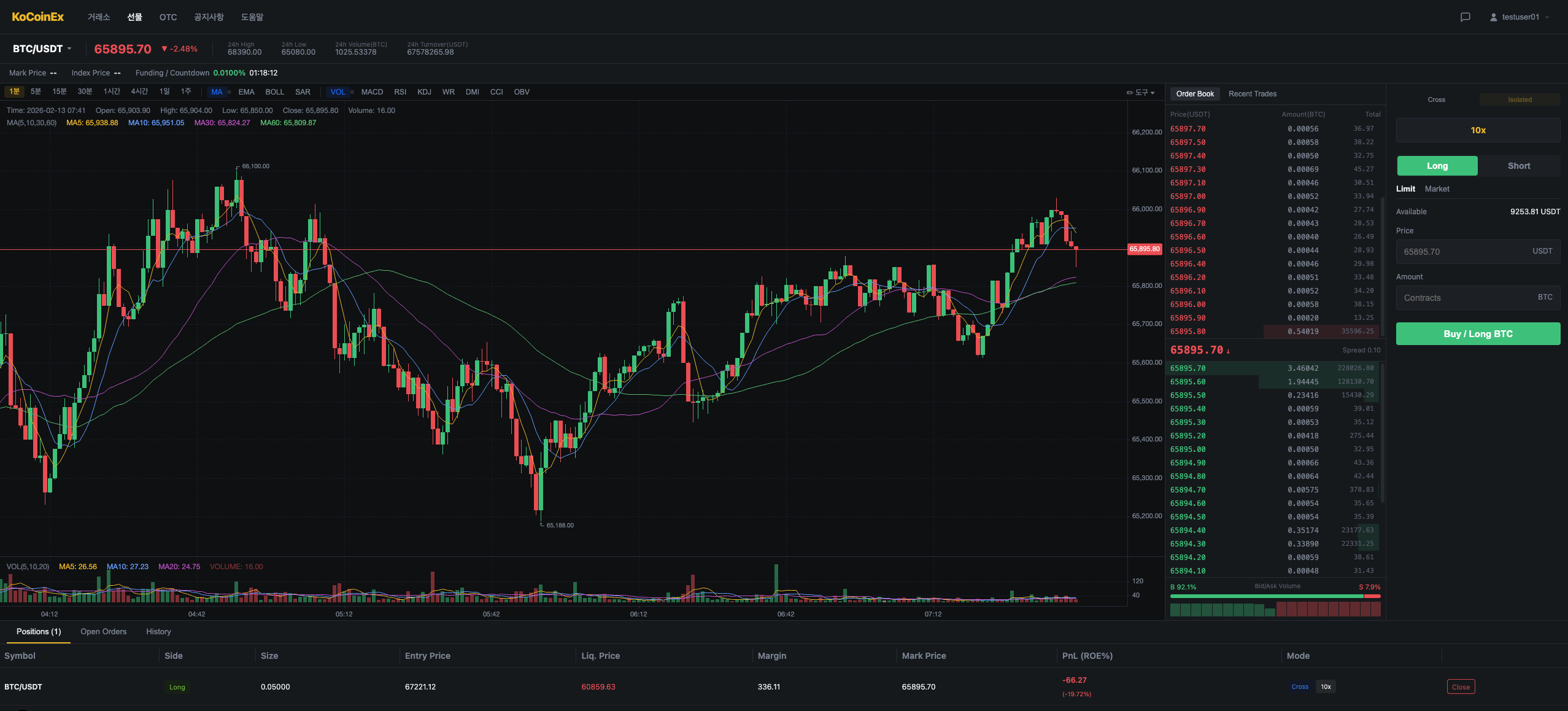
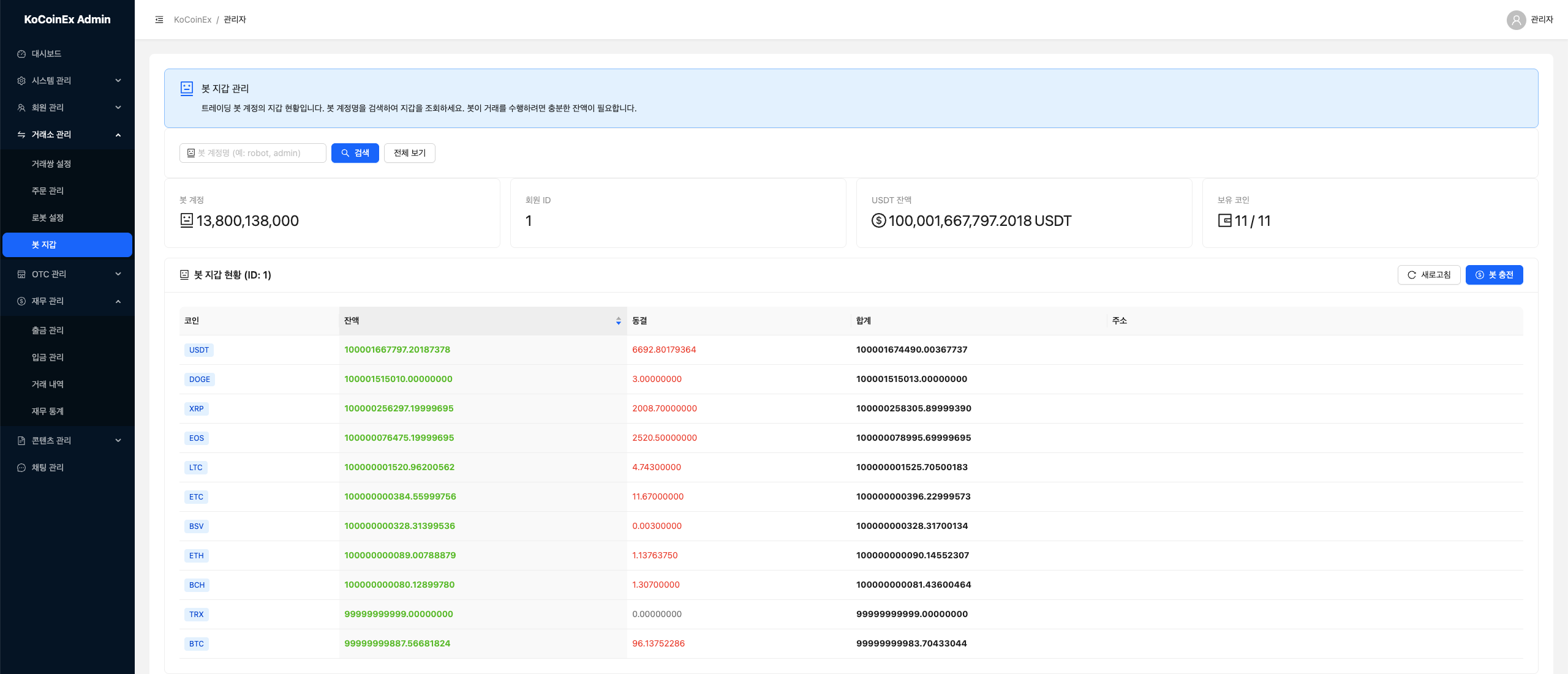
Well, it’s more or less done.
There’s no need to build it out any further so I’m stopping here, but order matching and futures position liquidation are implemented,
and the TPS looks good. Push it much further and I think my computer goes to heaven first…
System architecture
    [User browser] → [CloudFront/S3] → [ALB] → [API Gateway :8080]
                                                          │
                        ┌──────────────────────────────────┼──────────────────────────┐
                        │                                  │                          │
                  [UCenter :6001]                  [Exchange API :6004]        [Market :6003]
                  (members/auth/KYC)               (spot trading API)          (quotes/WebSocket)
                        │                                  │                          │
                  [OTC API :6002]                [Exchange Engine :6005]      [Futures API :6009]
                  (P2P trading)                   (order matching engine)     (futures trading API)
                        │                                  │                          │
                  [Wallet :6006]                [Futures Engine :6008]         [Chat :6007]
                  (deposits/withdrawals)         (futures matching engine)     (messaging)
                        │                                  │                          │
                  [Admin :6010]                   [Robot :20000]               [Redis 7]
                  (admin API)              (market-making bot — tracks Binance)  (cache/session)
                        │                                  │                          │
                        └──────────────[MySQL 8.0]─────────┼────[MongoDB 7.0]─────────┘
                                                           │
                                                      [Kafka 3.6]
                                                   (event streaming)
Core features
Trading covers spot trading (live order book + candlestick charts), futures trading (with leverage), OTC P2P fiat trading (escrow), and an automated market-making bot that tracks quotes from Binance/OKX/HTX.
User features include email/SMS-verified signup, KYC identity verification (ID upload), 2FA, multi-currency wallets (deposits/withdrawals), and a referral system with commission tracking.
Admin features span 60+ management pages: member management, the KYC approval workflow, trading-pair and coin configuration, order monitoring, financial reports, and bot control.
Now, supposing you deployed this to AWS with Terraform…
Performance analysis: users supported per configuration
I analyzed where this system bottlenecks and estimated how many users each server configuration could support.
Bottleneck analysis
| Area | Bottleneck | Impact |
|---|---|---|
| Matching engine | Single-threaded synchronized processing per symbol |
Caps throughput for a single trading pair |
| Gateway | Redis rate limiter + connection pool | Caps concurrent connections |
| Kafka | Broker count × partition count | Caps message throughput |
| MySQL | Connection pool (HikariCP max 50) + I/O | Bottleneck on persisting orders/fills |
| WebSocket | Market service memory + network bandwidth | Caps live-quote subscriber count |
Estimated performance by configuration
Tier 1: Staging / development (~$410/mo)
| Component | Spec |
|---|---|
| ECS Fargate | 0.5 vCPU / 1GB RAM per service (12 services) |
| MySQL | db.t3.micro (2 vCPU, 1GB) |
| Redis | cache.t3.micro |
| Kafka | kafka.t3.small × 2 brokers |
| MongoDB | t3.micro EC2 |
| Metric | Value |
|---|---|
| Concurrent users | 300 – 500 |
| Order throughput | ~200/sec (single trading pair) |
| WebSocket subscribers | ~1,000 |
| Order book depth | 100 levels |
| API response time | 50–200ms (p95) |
| Daily active users | ~2,000 |
Tier 2: Small production (~$1,200/mo)
| Component | Spec |
|---|---|
| ECS Fargate | 1 vCPU / 2GB RAM per service |
| MySQL | db.t3.medium (2 vCPU, 4GB) |
| Redis | cache.t3.small |
| Kafka | kafka.m5.large × 2 brokers |
| MongoDB | t3.small EC2 |
| Metric | Value |
|---|---|
| Concurrent users | 1,000 – 3,000 |
| Order throughput | ~800/sec (single trading pair) |
| WebSocket subscribers | ~5,000 |
| Order book depth | 100 levels |
| API response time | 20–100ms (p95) |
| Daily active users | ~10,000 |
Tier 3: Mid-size production (~$3,500/mo)
| Component | Spec |
|---|---|
| ECS Fargate | Engines 2 vCPU / 4GB, API services 1 vCPU / 2GB (Multi-AZ) |
| MySQL | db.r6g.large (2 vCPU, 16GB) + 1 read replica |
| Redis | cache.r6g.large (cluster mode) |
| Kafka | kafka.m5.large × 3 brokers |
| MongoDB | r6g.large EC2 |
| Metric | Value |
|---|---|
| Concurrent users | 5,000 – 15,000 |
| Order throughput | ~3,000/sec (single trading pair) |
| WebSocket subscribers | ~20,000 |
| Order book depth | 100 levels |
| API response time | 10–50ms (p95) |
| Daily active users | ~50,000 |
Tier 4: Large production (~$8,000+/mo)
| Component | Spec |
|---|---|
| ECS Fargate | Engines 4 vCPU / 8GB, API 2 vCPU / 4GB (3-AZ) |
| MySQL | db.r6g.xlarge (4 vCPU, 32GB) + 2 read replicas |
| Redis | cache.r6g.xlarge (cluster mode, 3 shards) |
| Kafka | kafka.m5.2xlarge × 3 brokers |
| MongoDB | r6g.xlarge EC2 (replica set) |
| Metric | Value |
|---|---|
| Concurrent users | 20,000 – 50,000 |
| Order throughput | ~8,000/sec (single trading pair) |
| WebSocket subscribers | ~80,000 |
| Order book depth | 100 levels |
| API response time | 5–30ms (p95) |
| Daily active users | ~200,000 |
Summary comparison
| Item | Tier 1 (staging) | Tier 2 (small) | Tier 3 (mid) | Tier 4 (large) |
|---|---|---|---|---|
| Monthly cost | ~$410 | ~$1,200 | ~$3,500 | ~$8,000+ |
| Concurrent | 300–500 | 1K–3K | 5K–15K | 20K–50K |
| Orders/sec | ~200 | ~800 | ~3,000 | ~8,000 |
| DAU | ~2K | ~10K | ~50K | ~200K |
| Suited for | Dev/test | Small launch | Mid-size exchange | Large exchange |
Note: These figures are theoretical estimates based on the code structure, data-structure characteristics, and infrastructure specs. Real performance varies with the number of trading pairs, order patterns, and network conditions, and you must run load tests before deploying to production. The project includes a load-testing framework (
loadtest/) that simulates 1,000 concurrent users.
There’s just no end to it, haha.
Enjoy your AI life, everyone!